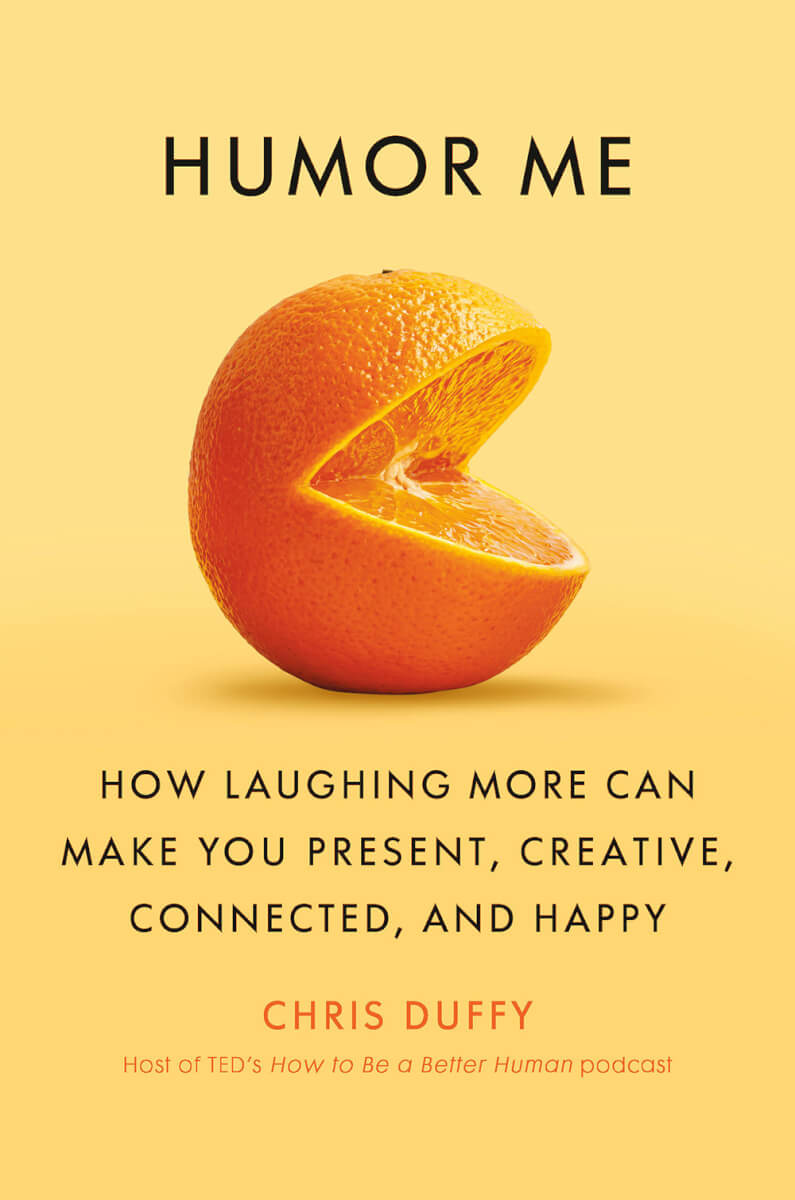
If there’s such a thing as a humor expert, Christopher Duffy has excellent credentials. He’s a stand-up comedian, wrote for HBO’s Wyatt Cenac’s Problem Areas and hosts the National Academy of Sciences’ delightfully nerdy comedy game show, Wrong Answers Only. He also hosts the megapopular TED podcast “How to Be a Better Human” and his September 2024 TED Talk “How To Find Laughter Anywhere” has more than 872,000 views.
In his first book, Humor Me: How Laughing Can Make You Present, Creative, Connected, and Happy, Duffy’s writerly voice is amusing, knowledgeable and supportive as he assures readers they, too, can achieve the “physical, philosophical, and perceptual shift that is a funnier life.”
The author’s Three Pillars of Good Humor entail being present, laughing at yourself and taking social risks. “The world is filled with absurdity,” he notes, and engaging with it is a surefire humor-booster. Duffy discovered funny oddities on the New York City subway and at Boston’s Museum of Bad Art, but any quest for quirkiness will improve attention span and awareness of “what tickles your funny bone.”
Duffy also asserts, “When we’re able to laugh at ourselves and honestly name our imperfections and fallibilities, it takes away their power to shame us” and cites studies showing that having less self-consciousness “makes other people like us more.” (Bonus: It boosts sex appeal, too.) Similarly, talking to strangers can be daunting, but social risks don’t have to be huge; even “knowing looks” forge connections if you’re “willing to both see and be seen.”
The author also explores the power of inside jokes, the humor-innovation connection, how amusement can lead to social change and how humor helps us contend with grief. And what’s worse than having no sense of humor? “Having a bad sense of humor” and using it to bully, rather than build connection.
Throughout Humor Me, Duffy’s sensible and sensitive advice is backed by research and keenly observed lived experience. His earnest belief that “a sense of humor is a portal to a better life” resonates as he demonstrates that the path to self-improvement so often begins with a hearty laugh.