Where do you go first in a bookstore?
I go to the fiction section and nose around in there, trying to look like I’m not ascertaining if they have any of my books.
Tell us about your favorite library from when you were a child.
It was on 55th Street in Chicago. My grandmother would walk us down there, and she had a way of conveying that this was a sacred, public space. She had a reverence for the place and expected us to feel (and behave) the same. I remember . . . the quiet, and dust motes falling slowly down in front of a plasticine window shade, a memory that, to this day, adds up to a sense of slowed-down time and a feeling that what was there in the library was something precious and eternal—a feeling that there was something there for me that was a gift from all the previous generations.
Have you ever had a surprising discovery among the stacks?
I had an experience once in the library at West Texas State University while I was (briefly) a student there. I was browsing through the fiction titles and happened to pick up a book by Céline. I didn’t know anything about him. I read about five pages, the opening of Journey to the End of the Night, and was blown away. Something about the plain, vernacular opened up a window in my head and I could suddenly imagine an American version of that voice. It was so exciting. I never finished the book—later found out he was a pretty rotten human being—but I already had what I needed from him, which was a form of permission to sound a certain way that was more in keeping with the way I actually felt and thought in real life.
“I’m someone who motivates myself and consoles myself and distracts myself and rewards myself with the same thing: a simple coffee.”
Do you have a favorite bookstore or library from literature?
I am going to slightly cheat and reference Isaac Babel’s beautiful story “Gedali,” in which a homesick young Jewish man in the midst of a war enters a curiosity shop (in which, I imagine, there are stacks of old books), and talks to the shopkeeper about revolution—whether a violent revolution can be a “sweet revolution”—just the type of conversation that should be had in a bookstore.
What is your ideal post-bookstore-browsing drink or snack?
I’m someone who motivates myself and consoles myself and distracts myself and rewards myself with the same thing: a simple coffee. So, given how much I have to do, I am always pretty overcaffeinated, and like it that way.
Do you have a bucket list of bookstores and libraries you’d love to visit but haven’t yet? What’s on it?
I’d like to go back to Shakespeare and Company in Paris and spend a long, quiet day there. I did a reading there once, but the day was busy.
What is the most memorable bookstore or library event you’ve participated in?
Well, at the above-mentioned Shakespeare and Company, while touring with Lincoln in the Bardo, it just so happened that an American theater company was in town, an all-female cast, and we read from the book chorus-style, and something magical happened. It had to do with that beautiful, ancient, intimate space, and those American voices sounding there inside it, and that Lincoln, in this version, was a woman . . . I can’t explain it, but I’ll never forget it.
“The only coherent personal library I have is the one in my head, and it’s not that coherent, to be honest.”
What’s the last thing you checked out from your library or bought at your local bookstore?
On a recent trip I bought a copy of Hannah Arendt’s powerful Eichmann in Jerusalem and read it on the plane ride back home.
How is your personal library organized?
It’s spread out between two houses and a storage unit, and one of my dreams is to get it all in one place and color-code it, or something. But for now, the only coherent personal library I have is the one in my head, and it’s not that coherent, to be honest.
Bookstore cats or bookstore dogs?
Yes, and the more of each the merrier.
Is the book always better than the movie? Why or why not?
I’m really not sure and am an advocate of the “Hey, you never can tell” school. One never knows what magic a given artist can achieve, in any form.
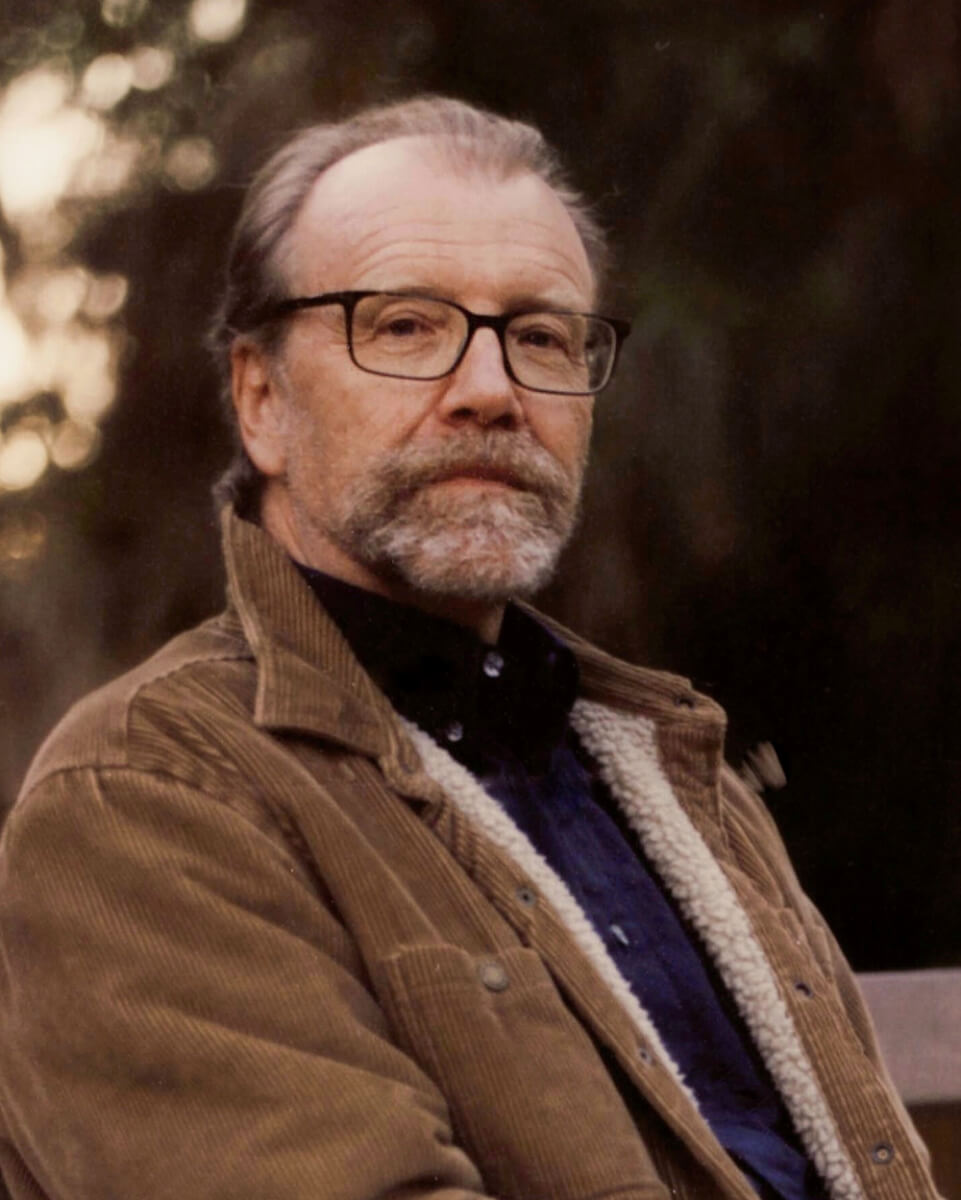
Author photo by Pat Martin.