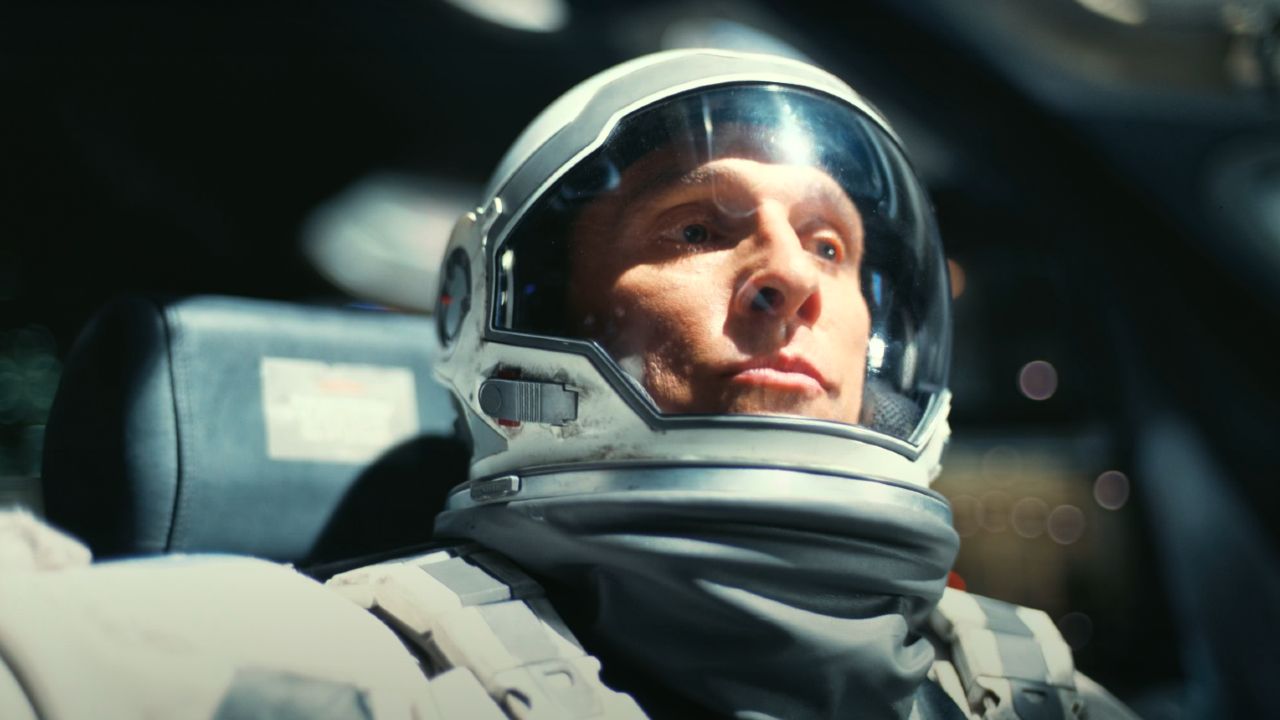
It’s easy, in hindsight, to look at Interstellar as one of Christopher Nolan’s best movies, if not his most emotional film. It’s one of his works people bring up now when they talk about how deeply his flicks can hit, the one that leaves audiences quietly wrecked by the end credits. But that wasn’t exactly the narrative when it first came out. Apparently, there was a brutal critique Nolan received “anonymously’ when the film hit theaters back in 2014.
During a recent Q&A, shared via the Nolan Archives YouTube channel and held at AMC Universal CityWalk as part of a “Timothée Chalamet Live” retrospective presented by Cinematheque screening, Nolan reflected on the Interstellar‘s original reception. And buried in that conversation is one of the more blunt critiques he’s ever gotten. He explained:
I had some very brave producer anonymously say of me, ‘He is a cold guy who makes cold films.’ Then it sort of stuck on me for several projects…. The reason I was attracted to my brother’s first act is because it’s about family and humanity, and it was deeply emotional. That’s the film I wanted to make. It’s a film that wears its heart on its sleeve.
It’s a pretty surgical critique and a common criticism I remember in the movie fan ether of the time. Honestly, it’s a criticism that still follows the director to this day. What’s interesting is that Nolan doesn’t dismiss it outright. Instead, he frames his space epic almost as a response to it.
Article continues below
According to the Dark Knight visionary, the emotional core of Interstellar wasn’t an accident but the reason he signed on in the first place. Responding to a question from Chalamet about the film’s growth in popularity and reevaluation, the director responded:
You’re trying to be polite. The film was received in a slightly ambiguous way. It was a little bit sniffy. Some of the responses were a bit sniffy from critics and a little bit from audiences. It made money, it made very good money around the world, particularly. But yeah, there was a little sense of people not quite being — it sounds egotistical to say they weren’t ready, or the world wasn’t ready for it. Something like that. But they weren’t ready for it from me.
That part is especially interesting. Nolan isn’t saying audiences weren’t ready for Interstellar as a movie so much as they weren’t ready for him to make that sort of movie. Coming off films like Inception and the Dark Knight trilogy, which some still consider one of the greatest superhero trilogies of all time, there was a certain idea of what a Nolan blockbuster was supposed to feel like. Interstellar is huge and brainy, sure, but it’s also achingly sentimental in places.
For some viewers, that clicked immediately, especially if they had kids. For others, it clearly took time but, if they weren’t clicking Interstellar on release, they have found new reasons to appreciate it. To Nolan’s credit, he seems at peace with that now. He added:
When you make a film on that scale, for me, when you show it to somebody who watches it — every screening we did as we were finishing the film, there’d be somebody who would just be in floods of tears and deeply moved by it. And that’s enough. You can’t also ask the culture to immediately embrace something. It’s asking too much in a way. If you talk to individuals who’ve connected with the film in a really profound way, then you know it’s there. You’ve done your job, and that the film’s there. The rest is about the zeitgeist and where you fit in with it.
The Oppenheimer helmer’s measuring stick wasn’t an immediate consensus, but whether the flick truly reached people, and clearly, it did. If anything, Interstellar’s long afterlife kind of proves his point. It’s become one of those films that has only grown in stature, even making our list of best sci-fi movies of all time.
If I’m being honest, when I caught the film in theaters back in 2014, I left feeling underwhelmed and considered it one of my least favorites of his movies. I haven’t really returned to it since. But, after hearing Nolan and Chalamet talk about the movie and its reevaluation over the years, I think it’s time for me to give it a second shot. Luckily for me, I can catch it streaming with my Paramount+ subscription.
So yes, somebody once branded Nolan as the guy who made “cold films.” Interstellar now feels like the film that quietly, and pretty definitively, disputed that argument. Even if his movies feel a bit too clinical at times, it’s clear the man behind Memento, Inception and yes, even Interstellar, is anything but cold.