Vague spoilers from Voicemails for Isabelle ahead.
There’s a moment in Voicemails for Isabelle that made my whole body react. This particular occurrence is nothing new, and I’m sure other Swifties can relate. It usually only takes the first few notes of a Taylor Swift song to cause that instant spark recognition, followed by a mixture of giddiness at the appearance of the song, blended with whatever mess of emotions that particular song evokes.
I was already a mess of emotions throughout the entirety of this new Netflix movie, but when “Marjorie” began to play partway through, I almost couldn’t believe it. At the same time, it was so perfectly a beautiful use of one of Taylor Swift’s most emotional songs (which is saying something). It turns out, getting permission to use it included a letter from the director.


How Leah McKendrick Got Permission to Use “Marjorie” In The Movie
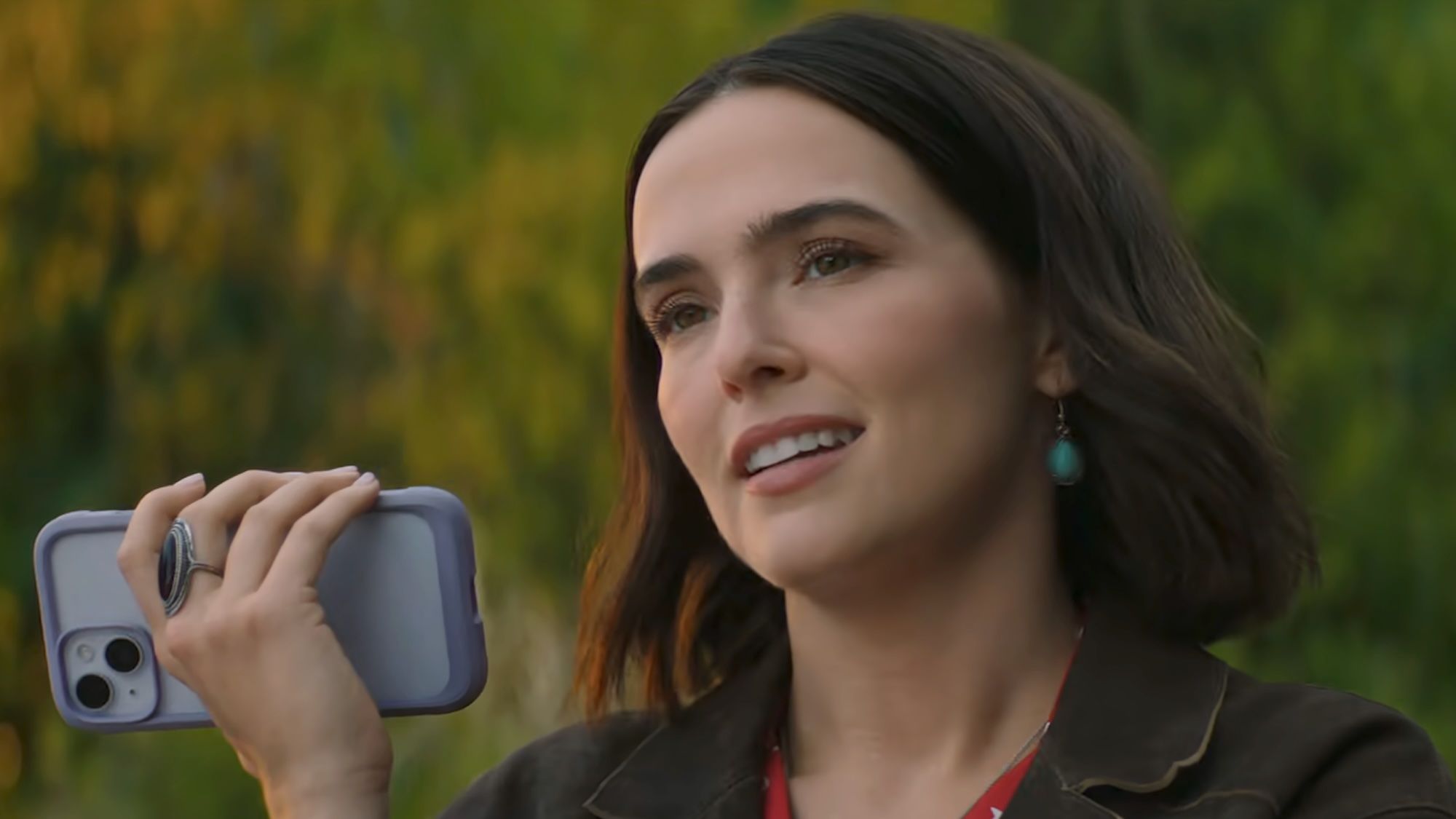
The song “Marjorie” pops up in Voicemails for Isabelle at around the 44:00 mark, when Jill (Zoey Deutch) is on her bench, leaving a voicemail to her sister about the fantasy she has about meeting the perfect man. Without realizing it, the exact experience she’s describing will soon be heard by Wes, who’s been receiving her voicemails. As the song continues to play, he intentionally shows up to meet her.
From the way Leah McKendrick described it to Deadline, there was no other song for this scene in her mind. So when it came time to request permission to use a couple of key songs in the movie, she wrote to Taylor Swift (for “Marjorie” and “New Year’s Day”) and Robyn (for “Dancing on my Own”):
I write a lot of letters. It’s very important to me. I don’t have [alternative]s with my music. I write my scene to my song. When it’s a list of one, you have no choice but to fight and beg. I said that to Taylor, I said that to Robyn. I said ‘There’s no other song.’
Having seen the movie, it’s entirely impossible to imagine the story ending with any other song than “Dancing on My Own.” I’m getting emotional just thinking about Jill’s joyful reaction, the sight of her sister dancing along with her in the background, and then Wes drawing Jill out of her sadness by joining the dancing. The song is so perfectly impactful, and I’d say the same about “Marjorie” in a different way.

Leah McKendrick “Cannot Live Without This Song”
At the point in the movie where “Marjorie” begins to play, Jill is still relying on the one-way communication she’s having with her sister. It’s not a joyful moment, but I wouldn’t say it’s entirely sad either. Grief is tricky that way, isn’t it? I don’t think you need to be familiar with the context of Swift’s song to appreciate its use in the movie, but I have no doubt other Swifties have their own associations with the song. McKendrick brought up Taylor Swift’s Eras Tour when discussing what that song means to her:
When I was at the Eras tour, I cried [to ‘Marjorie’] holding other Swifties, and it was a spiritual experience for me. I cannot live without this song, and Netflix knew that as well, and luckily for me, Netflix is a bunch of Swifties too, so everybody was fighting with me, and she was very generous in giving me that and ‘New Year’s Day.’
If you attended The Eras Tour or watched either of the concert films, you’ll know how emotional that performance is. I’ll get into the context in a second, but in terms of the crowd’s reaction, it became a tradition at each show for fans to shine phone lights in tribute to Marjorie as Taylor sang song. It’s absolutely no surprise that McKendrick would describe it as a spiritual experience. I imagine that was the case for a lot of people.

Who is Marjorie?
While Taylor usually leaves us to speculate about who her songs are about, “Marjorie” is a rare exception, not only because she named the Evermore song after her grandmother, opera singer Marjorie Finlay, but also because she uses footage and photos of Finlay in the lyric video. Finlay’s operatic voice can also be heard on the track (right after the lyric “If I didn’t know better, I’d think you were singing to me now.”) This very personal and heartbreaking song gives us insight into Swift’s grief over losing her grandmother, while ultimately recognizing that she lives on in her. Though it’s not a love song in the traditional, romantic sense, it’s easily one of her most emotional and beautiful songs.
Like so many Taylor Swift songs, the lyrics apply to her own feelings experiences, but they’re also relatable, and for me, the song’s appearance was one of my favorite parts of Voicemails for Isabelle.
You can watch Voicemails for Isabelle with a Netflix subscription.