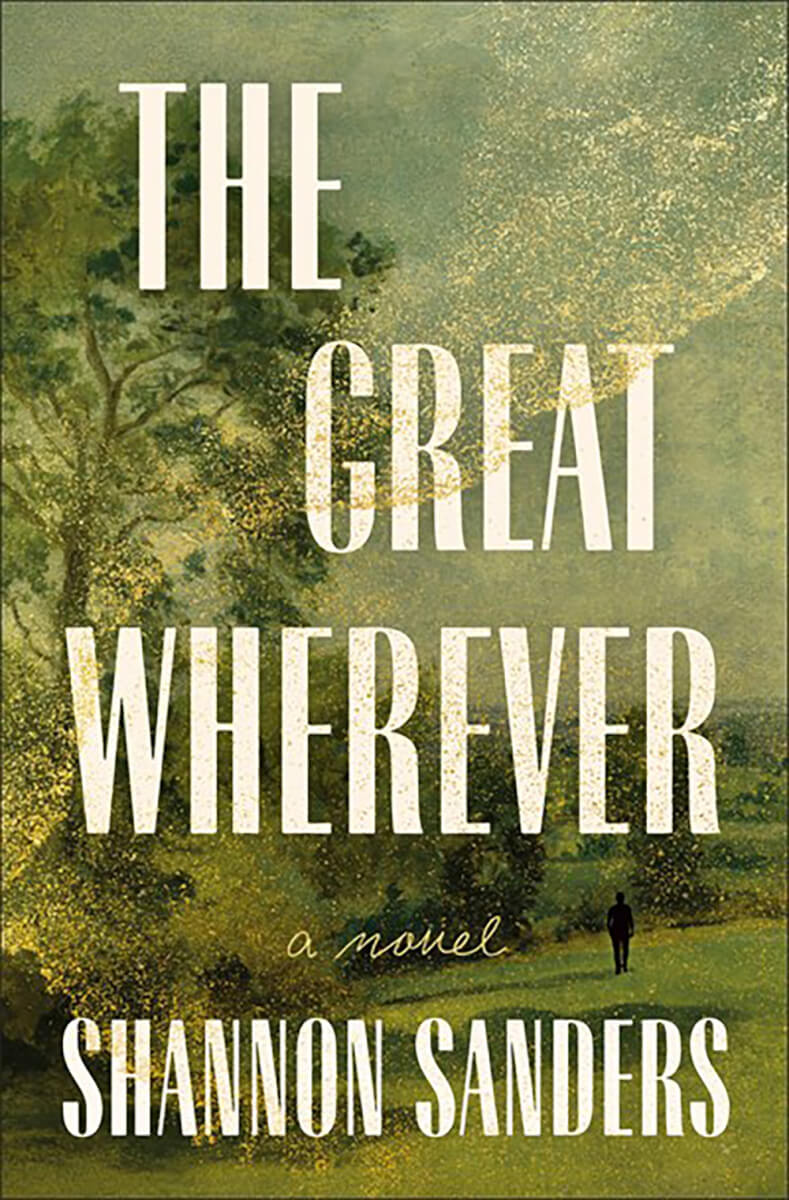
Shannon Sanders’ first novel, The Great Wherever, is an ingenious meditation on inheritances material, spiritual and emotional, and a worthy successor to her much-lauded short story collection, Company.
Aubrey Lamb has long felt like the underdog in her own story, the problematic black sheep of a successful Black family. A year after her father’s death, while her older sister Bellamy now occupies their childhood home with her dutiful husband and adorable children, Aubrey is flailing. At 32, she’s juggling full- and part-time jobs (senior legal document technician, yoga teacher, SAT tutor) and plagued by “overtly symbolic” anxiety dreams about her dwindling chances at motherhood. Then, one rainy night, the status quo takes a turn for the worse as Aubrey is dumped by her boyfriend of four years in the most pitying, deflating manner at her favorite restaurant.
It’s at this ebb that Aubrey finally turns her attention to the most recent of her relatives’ entreaties regarding 145 acres of Tennessee farmland that has been in the family for a century and which she now owns a third of, having inherited her father Micah’s share when he passed. There is an offer on the table to turn the family legacy into cash by selling to developers. Despite the lure of a payout, the land holds sentimental value, and her relatives have rebuffed every previous enticement. Aubrey feels none of their connection (she had forgotten the name of the county, Lanyers, when it popped up in her inbox), but she decides to accompany her cousin to see the property in person. That mercenary journey turns into one of discovery and revelation about herself and her family history. Meanwhile, chatty, unsettled ghosts occupy the farm and sit in judgment on their descendants’ choices.
The promise of this intriguing premise is elevated by Sanders’ writing. The wit and wisdom of Aubrey’s relatives, living and undead, is unmatched. What the deceased lack in flesh and blood, they make up for in attitude. These ghosts relish the vicarious thrill of experiencing life through those they watch over, believing their afterlife “has one great advantage over earthside society: it feeds our nosiness generously. Here, we aren’t restricted by geography or the walls of our own memories—even those of us who in life never boarded a plane, never even left western Tennessee, have nonetheless by now gotten to experience in-season swordfish Meuniere at the Baltimore Oceanaire by way of a living cousin.”
For a book about legacies and the afterlife, The Great Wherever is surprisingly and charmingly life-affirming.
Read our interview with Shannon Sanders about The Great Wherever.