
Howard Bloom is a prolific thinker and author whose work spans science, culture, history, and philosophy. Over decades, he has built a reputation as an intellectual provocateur — described by Britain’s Channel 4 TV as “the Einstein, Newton, Darwin, and Freud of the 21st century” — for his fearless interdisciplinary synthesis and big-picture thinking.

At the heart of Bloom’s current work is the Howard Bloom Institute (HBI), an intellectual hub rather than a conventional academic institution. HBI exists to promote Bloom’s ideas and advance what he calls “omnology” — the study of all systems together, without the artificial disciplinary boundaries that often constrain traditional science.
A New Cosmic Narrative
Bloom’s latest book, The Case of the Sexual Cosmos: Everything You Know About Nature Is Wrong, published in 2025, may be his most audacious work yet. In this sweeping exploration, Bloom challenges two deeply entrenched scientific assumptions — including the universality of the Second Law of Thermodynamics, which posits that disorder (entropy) must always increase — and reframes our understanding of life, evolution, and the very forces shaping the universe.
Rather than portraying the cosmos as a passive backdrop of random decay, Bloom argues in The Sexual Cosmos that life itself is an active agent of complexity and transformation, thriving through catastrophe, flamboyance, and creative excess. He suggests nature isn’t frugal and orderly by default, but extravagant, audacious, and ever-innovative — with sexuality and flamboyant display serving as fundamental drivers of evolutionary growth and cosmic self-organization.
Key Ideas in “The Sexual Cosmos”
- Life as a Force of Creation: Bloom reframes living systems as not just surviving but actively rewriting their environment — transforming toxic atmospheres, harnessing disaster, and inventing complexity against all odds.
- Sex and Flamboyance as Drivers: Contrary to the view of sex as just a reproductive strategy, Bloom elevates it to a cosmic principle. His First Law of Flamboyance posits that extravagant display — from flowers to mating rituals to cultural identities — accelerates evolution by creating new nodes of interaction and complexity.
- Challenging Entropy: The book critiques the Second Law of Thermodynamics as an incomplete explanation of the universe’s direction. Bloom instead proposes that nature’s penchant for building complexity — what he frames as a drive toward flamboyance and growth — must be accounted for in any full picture of existence.
- Sexual Cosmos and Human History: Bloom extends his cosmic argument into human affairs. He interprets historical transformations — from the courtship of Henry VIII and Anne Boleyn to the rise of new cultural identities — as “hurricanes of history” shaped by passionate pursuit, identity formation, and collective transformation.
Reception and Impact
The Case of the Sexual Cosmos has quickly become a talking point across science, philosophy, and culture. Supporters praise its ambitious scope and paradigm-challenging ideas. Several notable thinkers, including scientists and authors, have lauded the book for its originality and breadth.
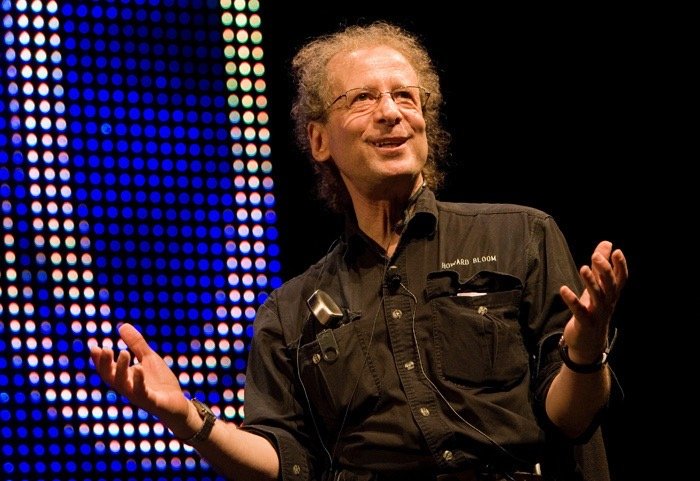
The book’s reception reflects Bloom’s broader influence: a blend of rigorous research and poetic exploration that refuses to fit neatly within existing intellectual categories. It has sparked discussions from academic circles to popular audiences, and even inspired live presentations, like his 2025 talk at the New Worlds Conference in Austin, Texas, where he emphasized space exploration as a natural extension of life’s intrinsic drive to grow and innovate.
A Vision Beyond Boundaries
In The Case of the Sexual Cosmos, Bloom invites readers to reconsider not only how nature operates but how humanity fits into the grand narrative of the cosmos. He portrays life as an insurgent force — one that thrives in adversity, embraces excess and creativity, and perpetually pushes the boundaries of what is possible. Through this lens, human curiosity, desire, and creativity are not mere byproducts of evolution — they are fundamental expressions of the universe’s unfolding complexity.
Whether one agrees with Bloom’s bold claims or not, his work undeniably challenges us to rethink the assumptions that underpin modern science and to see the universe — and ourselves — in a radically new light.